 忧郁的大能猫
好奇的探索者,理性的思考者,踏实的行动者。
blog/A-IT/00-CS基础/70-network/网络编程/【图书】Linux多线程服务端编程:使用muduo-C++网络库
Table of Contents:
TCP网络编程最本质的是处理三个半事件:
1.连接的建立,包括服务端接受(accept)新连接和客户端成功发起(connect)连接。TCP连接一旦建立,客户端和服务端是平等的,可以各自收发数据。
2.连接的断开,包括主动断开(close、shutdown)和被动断开(read(2)返回0)。
3.消息到达,文件描述符可读。这是最为重要的一个事件,对它的处理方式决定了网络编程的风格(阻塞还是非阻塞,如何处理分包,应用层的缓冲如何设计,等等)。
3.5 消息发送完毕,这算半个。对于低流量的服务,可以不必关心这个事件;另外,这里的“发送完毕”是指将数据写入操作系统的缓冲区,将由TCP协议栈负责数据的发送与重传,不代表对方已经收到数据。
常见问题
- 如果主动发起连接,但是对方主动拒绝,如何定期(带back-off地)重试?
- 如果是水平触发,那么什么时候关注EPOLLOUT事件?会不会造成busy-loop?
- 如果是边沿触发,如何防止漏读造成的饥饿?
- 非阻塞网络编程中正确处理数据发送比接收数据要困难,因为要应对对方接收缓慢的情况。
- 用户的回调是如何一步一步传到框架代码并被调用的
conn->setConnectionCallback(connectionCallback_);        //用户传
conn->setMessageCallback(messageCallback_);              //用户传
conn->setWriteCompleteCallback(writeCompleteCallback_);  //用户传
conn->setCloseCallback(std::bind(&TcpServer::removeConnection, this, _1)); // FIXME: unsafe
为什么需要buffer
int buffer
- TCP是一个无边界的字节流协议,接收方必须要处理“收到的数据尚不构成一条完整的消息"
output buffer
- 发送数据时,一次发很多,发不完,不能阻塞,得根据滑动TCP窗口得等对端收了后再发
- 如果buffer里还有待发送的20kB数据,程序又写入了50kB,那么网络库不应该直接调用write(),而应该把这50kB数据append在那20kB数据之后
- 如果output buffer里还有待发送的数据,而程序又想关闭连接,得等数据发送完毕再关
如何设计并使用缓冲区?
Buffer的设计要点:
- 对外表现为一块连续的内存(char* p, int len),以方便客户代码的编写。
- 其size()可以自动增长,以适应不同大小的消息。
Buffer大小的设计?
一方面我们希望减少系统调用,一次读的数据越多越划算。另一方面希望减少内存占用。如果有10000个并发连接,每个连接一建立就分配各50kB的读写缓冲区的话,将占用1GB内存。
在栈上准备一个65536字节的extrabuf,然后利用readv()来读取数据,iovec有两块,第一块指向muduo Buffer中的writable字节,另一块指向栈上的extrabuf。这样如果读入的数据不多,那么全部都读到Buffer中去了;如果长度超过Buffer的writable字节数,就会读到栈上的extrabuf里,然后程序再把extrabuf里的数据append()到Buffer中
这么做利用了临时栈上空间 14 ,避免每个连接的初始Buffer过大造成的内存浪费,也避免反复调用read()的系统开销
连接建立过程
一个连接的生命周期过程,如何被创建,如何被销毁?
连接断开过程
如果要主动关闭连接,如何保证先发送完缓冲区中的数据,保证对方已经收到全部数据?
本端主动断开
- 过程
- 把自己output buffer中的数据都发完
- 调用
shutdown(sockfd, SHUT_WR), 关闭写端,但是还能读对方的数据 - 对端收到
\0后对端调用close()或shutdown() - 本端
TcpConnection::handleRead收到\0后,handleClose()->TcpServer::removeConnection()-> 从TcpServer::connections_移除此TcpConnection-> 移出channel_监听的事件 TcpConnection被移除后,生命周期结束,起成员Socket在析构时调用close()
- 目的:
- muduo把“主动关闭连接”这件事情分成两步来做,如果要主动关闭连接,它会先关本地“写”端,等对方关闭之后,再关本地“读”端。这是解决如果对方已经发送了数据,这些数据还“在路上”,那么muduo不会漏收这些数据。
- 过程
对端主动断开
- 执行主动断开的3、4、5步骤
对象的生命周期
对于使用muduo库而言,只需要掌握5个关键类:EventLoop、TcpServer、TcpClient 、TcpConnection、Buffer。
TcpConnection 的生命期依靠shared_ptr管理(即用户和库共同控制)。
Buffer 的生命期由 TcpConnection 控制。
其余类的生命期由用户控制。
Buffer和InetAddress具有值语义,可以拷贝;其他class都是对象语义,不可以拷贝
TCP分包,解码器
常见分包方法;
1.消息长度固定,比如muduo的roundtrip示例就采用了固定的16字节消息。
2.使用特殊的字符或字符串作为消息的边界,例如HTTP协议的headers以“\r\n”为字段的分隔符。
3.在每条消息的头部加一个长度字段。
4.利用消息本身的格式来分包,例如XML格式的消息中<root>...</root>的配对,或者JSON格式中的{ ... }的配对。解析这种消息格式通常会用到状态机(state machine)。
以第三种方式为例:
增加一个 LengthHeaderCodec 的中间层来进行编码解码,真正的逻辑通过设置回调函数设置到 LengthHeaderCodec 中。
- 当消息来时:
1. TcpServer 的 setMessageCallback 设置成 LengthHeaderCodec 的 onMessage, 业务逻辑的 onMessage回调设置到 LengthHeaderCodec 中
2. 先回调 LengthHeaderCodec 的 onMessage, 再调用业务逻辑的 onMessage
- 当发消息时:先调用 LengthHeaderCodec 的 send , 封好包之后再调用网络的 send
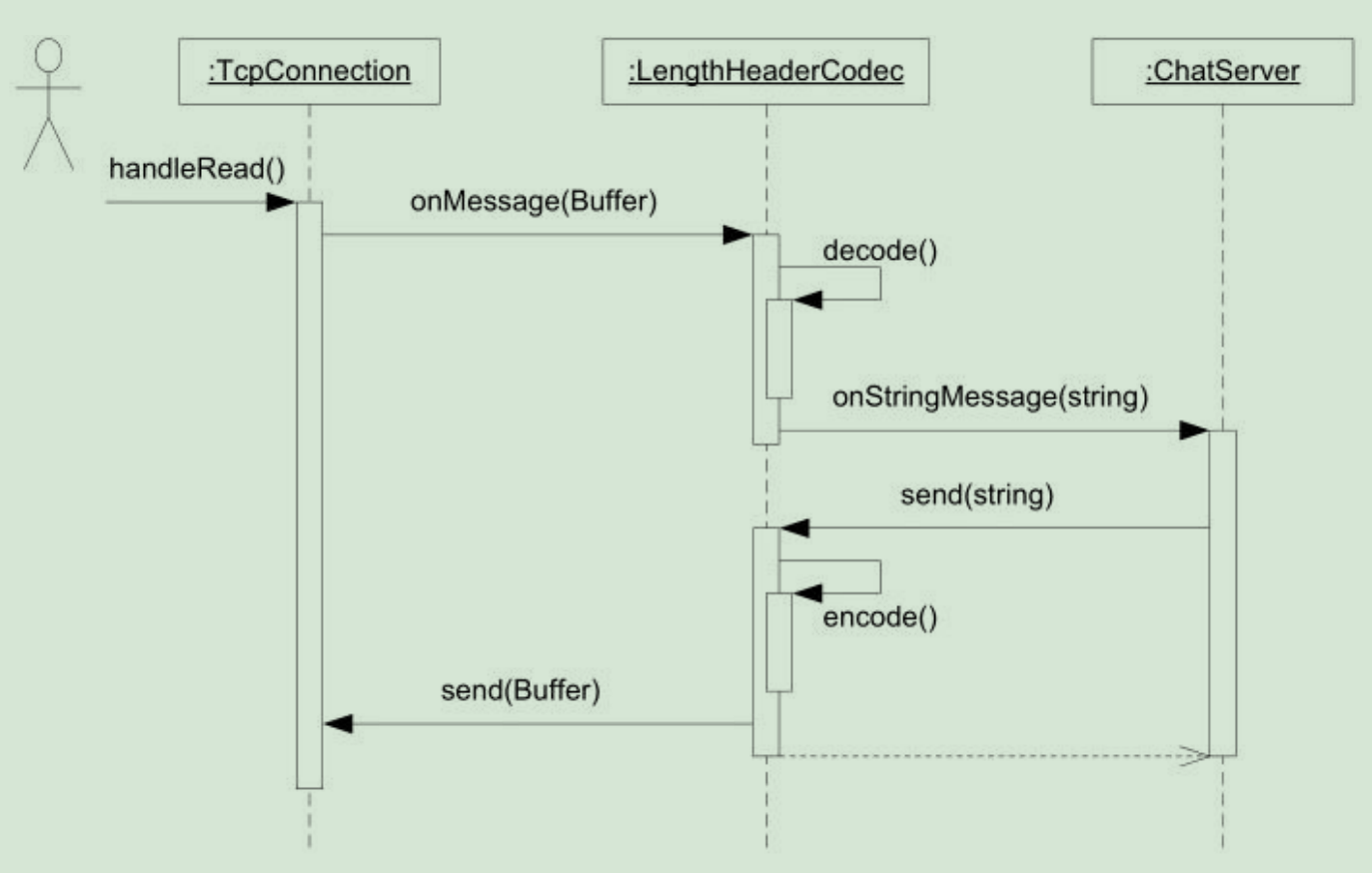
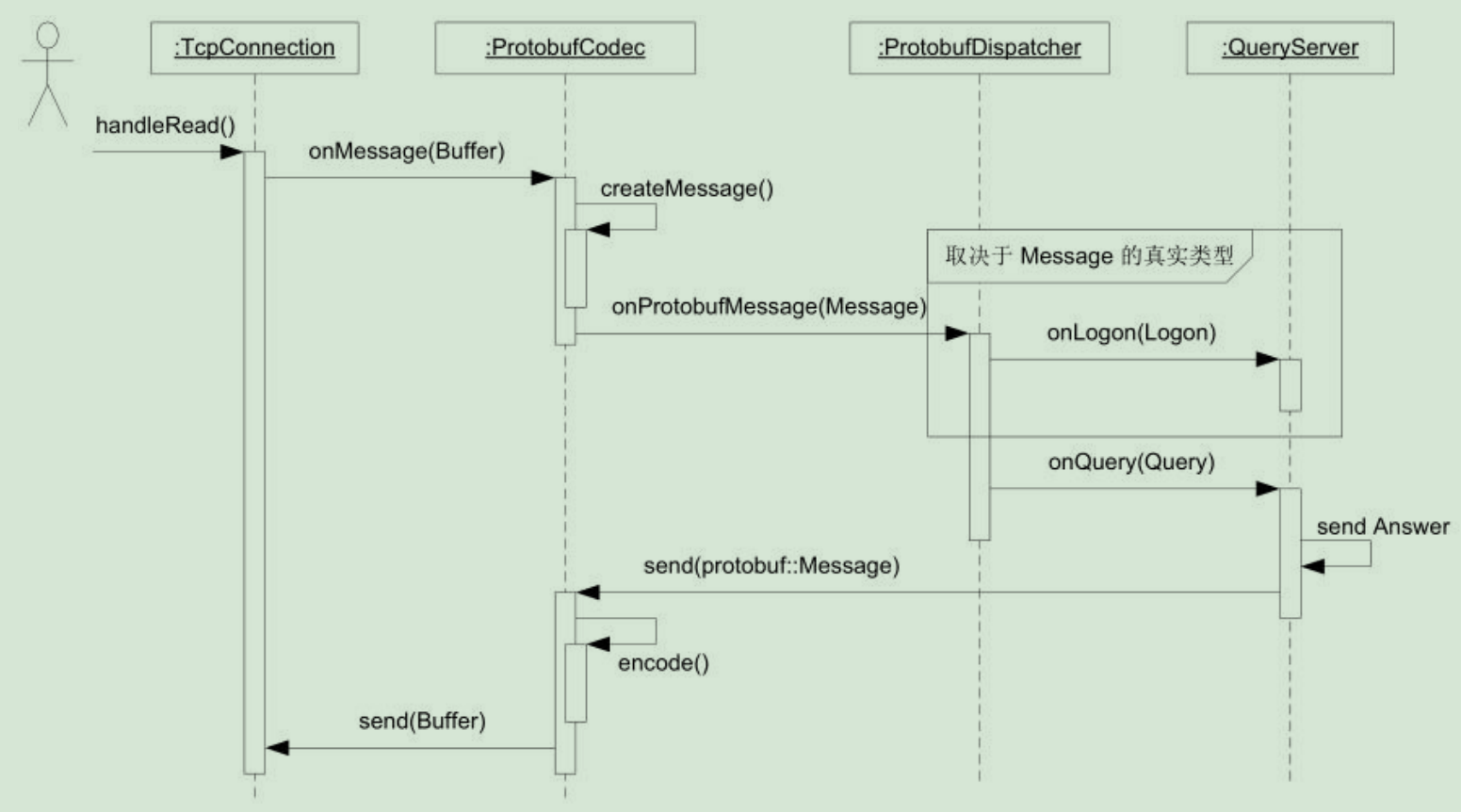
消息分发器(dispatcher)

子线程启动eventLoop,主线程send
例子代码:example/asio/chat/client.cc
比如:客户端的例子。它要读取键盘输入,而EventLoop是独占线程的,所以需要两个线程:main()函数所在的线程负责读键盘,另外用一个EventLoopThread来处理网络IO。
- 当
onConnection回调时,把TcpConnectionPtr保存起来 - 当有键盘输入时,在主线程调用
TcpConnectionPtr进行消息的发送conn->send(&buf); - 调用
loop_->runInLoop( ), 把可调用对象插入到eventLoop的pendingFunctors_中 - 在loop循环的最后调用可调用对象进行真正的发送逻辑
base模块
- ClassName
- 作用:简短说明作用
- 成员:
member1member2
- 方法:
method1()
- 备注:
- 备注说明1
通用
- StringPiece
- 作用:Google发明的专门用于传递字符串参数的class,这样程序里就不必为
const char*和const std::string&提供两份重载了 - 成员:
const char* ptr_;int length_;
- 方法:
- 主要是不同的构造函数
- 作用:Google发明的专门用于传递字符串参数的class,这样程序里就不必为
线程
- CurrentThread
- 作用:当前线程的信息,这个不是类,是一个命名空间
- 成员
- 方法:
tid()返回线程idname()返回线程名字isMainThread()实现return tid() == ::getpid();
- MutexLock
- 作用:对互斥锁的封装
- 成员:
pthread_mutex_t mutex_;pid_t holder_;持有当前锁的线程的id,通过CurrentThread::tid();来获得
- 方法:
lock()调用pthread_mutex_lock()unlock()调用pthread_mutex_unlock()- 构造:调用
pthread_mutex_init() - 析构:调用
pthread_mutex_destroy()
- MutexLockGuard
- 作用:互斥锁的RAII类
- 成员:
MutexLock& mutex_;
- 方法:
- 构造:调用
MutexLock的lock() - 析构:调用
MutexLock的unlock()
- 构造:调用
- Condition
- 作用:对条件变量的封装
- 成员:
MutexLock& mutex_;锁pthread_cond_t pcond_;条件变量
- 方法:
wait()调用pthread_cond_wait()notify()调用pthread_cond_signal()notifyAll()调用pthread_cond_broadcast()- 构造:调用
pthread_cond_init - 析构:调用
pthread_cond_destroy
- CountDownLatch
- 作用:把
- 成员:
MutexLock mutex_;
Condition condition_int count_
- 方法:
wait()当count_ > 0时,调用wait()等待countDown()count_--, 若count_ == 0, 则调用notifyAll()
- ThreadData
- 作用:把线程执行的逻辑封装在这个里面,即把
std::function封装到里面 - 成员:
std::function<void ()> func_;执行的函数体string name_;CountDownLatch* latch_;
- 方法:
runInThread()执行func_并处理相关异常
- 注意:
- ThreadData对象是在堆内存上创建的,其指针会传给
pthread_create, 从而传到子线程中
- ThreadData对象是在堆内存上创建的,其指针会传给
- 作用:把线程执行的逻辑封装在这个里面,即把
- Thread
- 作用:线程封装类
- 成员:
pthread_t pthreadId_;线程idCountDownLatch latch_;作用是真正创建并执行了线程函数后通知主线程创建成功
- 方法:
- 构造:最主要的是传入可调用对象
std::function - 析构:调用
pthread_detach() start()调用pthread_create()创建线程,传的函数指针是startThread(), 数据指针是ThreadData, 最终是启线程执行func_join()调用pthread_join()
- 构造:最主要的是传入可调用对象
- ThreadPool
- 作用:线程池
- 成员:
typedef std::function<void ()> Task;std::vector<std::unique_ptr<muduo::Thread>> threads_;线程的容器std::deque<Task> queue_任务队列Condition notEmpty_ notFull_用来控制队列的空或满的等待
- 方法:
start(numThreads_)启动线程池,创建numThreads_个Thread对象,开启numThreads_个线程,设置的可执行对象为runInThread()runInThread()在while循环,从队列中取task并执行run(Task task)把Task放到队列中stop()把threads_中的线程挨个join掉
- ThreadLocal
- 作用:线程局部存储(Thread-Local Storage, TLS)的模板类
- 成员:
typedef std::function<void ()> Task;std::vector<std::unique_ptr<muduo::Thread>> threads_;线程的容器std::deque<Task> queue_任务队列Condition notEmpty_ notFull_用来控制队列的空或满的等待
- 方法:
- 构造:调用了
pthread_key_create函数来创建一个线程局部键(pkey_),它有神奇的作用,通过此key,不同的线程可以设置和获取本线程独一份的数据 - 析构:调用了
pthread_key_delete函数来删除之前创建的线程局部键 value(): 神奇的功能都在这里,当局部键为空的时候,new一个对象并把其指针赋给局部键,非空的时候把局部键转成对象返回destructor(void *x): 此deletor会传给pthread_key_create,用于在线程结束时自动调用,清理线程局部存储中的资源
- 构造:调用了
- ThreadLocalSingleton
- 作用:线程局部存储的单例类
- 方法:
instance(): 返回线程单例对象
- 备注:
- 当某个线程第一次调用
instance()时,ThreadLocalSingleton会检查该线程是否已经拥有T类型的实例。 - 如果没有,则创建一个实例,并通过
Deleter将其与当前线程的 TLS 键关联。 - 在线程结束时,
pthread_key_t关联的destructor函数会被调用,清理T类型的实例。 - 这确保了每个线程都有自己独立的
T实例,并且不会与其他线程的实例冲突。 - 使用例子:
server_threaded_highperformance.cc
- 当某个线程第一次调用
事件循环
- EventLoop
- 作用:里面维护者所有的
Channel,EventLoop不关心Pooler是如何维护Channel列表的。只关心获得了activeChannels_就回调用户的方法 - 成员:
std::unique_ptr<EPoller> poller_;std::vector<Channel*> activeChannels_std::unique_ptr<TimerQueue> timerQueue_;处理定时任务,和其他事件的逻辑一样std::vector<Functor> pendingFunctors_;在主循环的末尾执行,其他线程内调用EventLoop可以把执行的方法std::unique_ptr<Channel> wakeupChannel_;用于唤醒被阻塞住的主循环
- 方法:
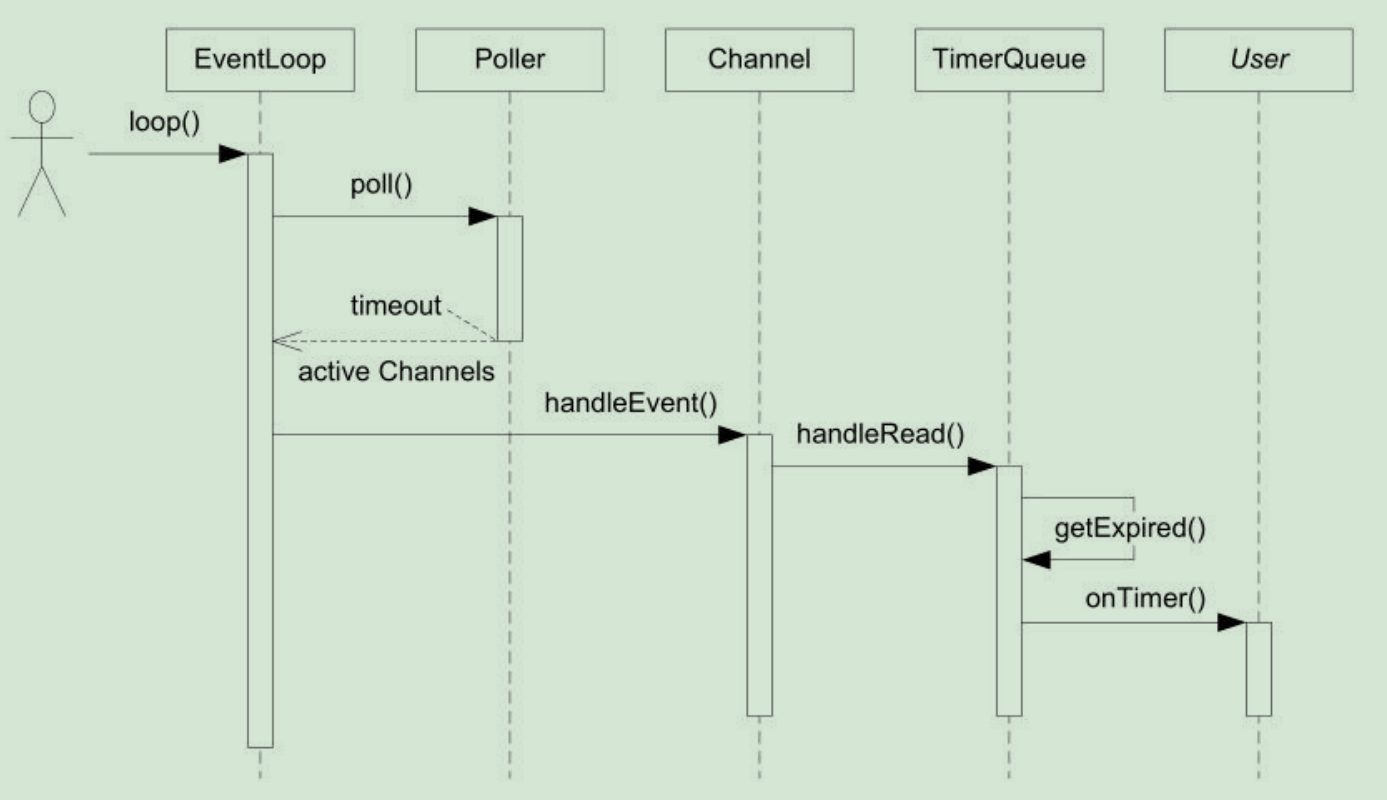
loop();- 主循环,调用
Poller::poll()获得当前活动事件的Channel列表,然后依次调用每个Channel的handleEvent()函数。 - 即:1.取出活动的事件 2.处理事件
- 主循环,调用
updateChannel()、removeChannel()调用poller来更新Channelwakeup();当阻塞到poll()调用中,它用eventfd(2)来异步唤醒queueInLoop()将cb放入队列,并在必要时唤醒IO线程runAt(),runAfter(),runEvery()
- 备注:
- 作用:里面维护者所有的
- Poller
- 作用:poll epoll的封装,生命周期和 EventLoop相等,采用水平触发
- 成员:
std::map<int, Channel*> channels_维护着所有fd的Channel, 此Channel是所有的,EventLoop中的是活跃的
- 方法:
virtual poll() = 0、virtual updateChannel() = 0、virtual removeChannel() = 0newDefaultPoller()根据设置创建具体的poller
- 备注:
- 拥有EventLoop指针的作用:判断是否再loop线程中
assertInLoopThread
- 拥有EventLoop指针的作用:判断是否再loop线程中
- PollPoller : Poller
- 作用:维护底层的事件结构
pollfds_和 上层的事件结构channels_ - 成员:
std::vector<struct pollfd> pollfds_
- 方法:
poll();调用系统的poll(), 把实际发生的事件填充到pollfds_中, 并调用fillActiveChannels()fillActiveChannels()通过pollfds_从channels_获取发生的事件的fd的Channel, 并将其设置到EventLoop的activeChannels_中updateChannel()向pollfds_和channels_中添加或更新其中的数据removeChannel()从pollfds_和channels_中删除数据
- 作用:维护底层的事件结构
- EPollPoller : Poller
- 作用:维护底层的事件数据结构
events_和 上层的事件数据结构channels_ - 成员:
std::vector<struct epoll_event> events_
- 方法:
poll();调用系统的poll(), 把实际发生的事件填充到events_中, 并调用fillActiveChannels()fillActiveChannels()通过events_从channels_获取发生的事件的fd的Channel, 并将其设置到EventLoop的activeChannels_中updateChannel()向events_和channels_中添加或更新其中的数据removeChannel()从events_和channels_中删除数据
- 作用:维护底层的事件数据结构
- Channel
- 作用:负责注册与响应IO事件。每个Channel对应一个fd,它存着各种关注的事件及回调函数,负责各种事件的回调。 相当一个对监听对象的各种事件的封装
- 成员:
const int fd_;底层关注的fdint events_关注那些事件,读、写事件。按位进行设置的, 如enableReading() { events_ |= kReadEvent; update(); }int revents_调用poll()后返回的那些事件std::function<void()> readCallback_, writeCallback_, closeCallback_,errorCallback_各个回调函数
- 方法:
handleEvent()根据revents_返回的事件调相应的回调函数enableReading()events_设置监听读,再调用update()update()、remove()调用EventLoop的updateChannel()、removeChannel()
- 备注:
- 每个 Channel,自始至终都属于一个 EventLoop(不用为线程安全问题烦恼)
定时器模块
- TimerId
- 作用:定时器的id,主要用于标识timer、取消timer,id是通过全局原子类型 AtomicInt64 自增得到的
- 成员:
-
Timer* timer_;、int64_t sequence_;
-
- Timer
- 作用:对定时器的时间点和事件的封装
- 成员:
std::function<void()> callback_Timestamp expiration_;过期时间const double interval_;间隔const bool repeat_是否重复执行
- 备注:
- 此class是内部实现细节,用户看不到
- TimerQueue
- 作用:对定时器的时间点和事件的封装
- 成员:
Channel timerfdChannel_, 使用了一个Channel来观察timerfd_上的readable事件std::set<std::pair<Timestamp, Timer*>> timers_按照时间排序,使用二叉搜索树维护timer,方便按时间查找std::set<std::pair<Timer*, int64_t>> activeTimers_按照timerId排序,方便通过id进行查找
- 方法:
addTimer()有更早的timer会重置timerfd, 供EventLoop使用,EventLoop会把它封装为更好用的runAt()、runAfter()、runEvery()等函数cancel()通过传入TimerId参数,从而在维护的数据timer结构中找到timer并删除掉handleRead()1. timer到期事件发生时调用 2. 调用getExpired()获取超时的timer 3. 回调timer的用户函数 4. 调用reset()getExpired()从timers_中得到过期的,并把过期的删除reset()1.若到期的timer是定时执行的,则重新添加timer,否则删除 2. 从timers_获取最早到期的时间,并重置timerfd
- 备注:
- 此class是内部实现细节,用户看不到
- 为什么存在
timers_和activeTimers_两个结构来维护timer?timers_按过期时间排序的集合,可以高效地找到最早需要触发的定时器。而activeTimers_则是根据对象地址和timerid排序的,通过TimerId可以在activeTimers_中快速找到,但是无法在timers_中快速找到- 在代码中,
timers_和activeTimers_的大小始终保持一致,通过这个约束来确保数据结构的一致性和操作的正确性
线程模块
- EventLoopThread
- 作用:本对象创建时,会启动子线程,并在其中运行EventLoop::loop()
- 成员:
Thread thread_;EventLoop* loop_
- 方法:
EventLoopThread()创建Thread对象,并设置threadFunc()为线程函数threadFunc()线程体函数, 创建EventLoop对象,并执行其loop()成员函数startLoop()启动线程并返回EventLoop对象
- EventLoopThreadPooll
- 作用:
- 成员:
int numThreads_;std::vector<std::unique_ptr<EventLoopThread>> threads_;std::vector<EventLoop*> loops_;EventLoop* baseLoop_;当numThreads_ == 0是才使用baseLoop_, 好像是用处不大
- 方法:
start()1. 创建numThreads_个EventLoopThread对象,并启动EventLoop对象 2. 填充threads_、loops_getNextLoop()轮训返回loop对象
网络模块
服务器端
- Socket
- 作用:一个RAIIhandle,封装一个filedescriptor,并在析构时关闭fd
- 成员:
const int sockfd_;
- 方法:
bindAddress()
listen()accept()
- SocketsOps
- 作用:封装各种Sockets系统调用
- TcpServer
- 作用:管理
Acceptor获得的TcpConnection - 成员:
EventLoop* loop_; // the acceptor loop
std::shared_ptr<EventLoopThreadPool> threadPool_;线程池,里面时 ioLoopstd::unique_ptr<Acceptor> acceptor_;std::map<string, TcpConnectionPtr> connections_
- 方法:
start()- 本线程的
EventLoop中增加Acceptor的读事件,开启网络监听
- 本线程的
- 执行
threadPool_的start(), 开启IO线程池
- 执行
newConnection()- 在构造时便把
newConnection()设置到Acceptor的newConnectionCallback_上了
- 在构造时便把
- 从
threadPool_中获取ioLoop
- 从
- 创建
TcpConnection对象,设置4个回调函数,并放到connections_容器中
- 创建
- ioLoop中开启对此
TcpConnection对象的事件的监听
- ioLoop中开启对此
removeConnection()- 从
connections_容器中移出
- 从
- 调用
TcpConnection::connectDestroyed
- 调用
- 备注:
- 供用户直接使用的,生命期由用户控制
- 作用:管理
- Acceptor
- 作用:对内class,供TcpServer使用,生命期由后者控制,负责socket bind listen accept和有了
accept事件后的回调 - 成员:
Channel acceptChannel_;Socket acceptSocket_;
- 方法:
listen()1.调网络API开始listen 2.acceptChannel_启用监听可读事件handleRead()1.调网络API accept() 2. accpet到后回调 TcpServer 传过来的newConnectionCallback_
- 作用:对内class,供TcpServer使用,生命期由后者控制,负责socket bind listen accept和有了
- TcpConnection
- 作用:负责连接的状态、 发送数据、接收数据、连接关闭,事件又是通过Channel来获得的
- 成员:
std::unique_ptr<Socket> socket_;拥有TCP socket,它的析构函数会close(fd)- `std::unique_ptr
channel_; connectionCallback_,messageCallback_,writeCompleteCallback_,closeCallback_各种回调Buffer inputBuffer_;,Buffer outputBuffer_;
- 方法:
Constructor把handleXXX()系列函数设置到channel_的回调中handleRead();handleWrite();handleClose();handleError();
- 备注:
- 没有发起连接的功能,其构造函数的参数是已经建立好连接的socket fd
- Buffer
- 作用:数据的读写通过buffer进行。用户代码不需要调用read(2)/write(2),只需要处理收到的数据和准备好要发送的数据
- 成员:
std::vector<char> buffer_;size_t readerIndex_;size_t writerIndex_;
- 方法:
- 主要的就是各种取数据、写数据的方法
- 备注:
- | prependable bytes | readable bytes | writable bytes |
- 0 <= readerIndex <= writerIndex <= size
客户端
- Connector
- 作用:只 负 责 建 立 socket 连 接, 不 负 责 创 建 TcpConnection
- 成员:
std::function<void (int sockfd)> newConnectionCallback_连接成功后的回调
- 方法:
connect()建立连接,失败会进行重试connecting()通过上一步的调用操作系统的connect()接口的返回值获得返回状态,若是连接中,则设置socket可写的回调handleWrite()当连接可写时再通过sockets::getSocketError(sockfd);获取socket的状态判断是否连接成功
- 备注:
- TcpClient
- 作用:它的代码与TcpServer甚至有几分相似(都有newConnection和removeConnection()这两个成员函数),只不过每个TcpClient只管理一个TcpConnection
- 成员:
EventLoop* loop_;ConnectorPtr connector_;connectionCallback_;、messageCallback_;、writeCompleteCallback_;提供给用户的回调
- 方法:
- 备注:
protobuf
- ProtobufCodecLite
- 作用:protobuf网络格式的编码解码的中间层
- 成员:
typedef std::function<void (const TcpConnectionPtr&,const MessagePtr&,Timestamp)> ProtobufMessageCallbackProtobufMessageCallback messageCallback_;用户业务逻辑的回调,回调经过ProtobufDispatcher后拿到的直接就是具体的protobuf消息格式
- 方法:
onMessage(const TcpConnectionPtr& conn,Buffer* buf,Timestamp receiveTime);解码解析的主要逻辑,解析完回调上层传过来的用户回调send(TcpConnectionPtr& conn,Message& message)编码并进行发生的逻辑
- ProtobufDispatcher
- 作用:注册消息处理的函数并进行消息处理的分发
- 成员:
std::map<string key, Callback> callbacks_保存所有的处理函数
- 方法:
onProtobufMessage()收到数据解析成protobuf::Message的数据后,根据名字查找相应的处理函数registerMessageCallback()注册消息处理的函数
- 备注:
- 解析创建的类型是protobuf的Message类型,handle处理函数接收的如何变成具体类型?
在注册出处理函数的时候,把类型模板参数传进去
注册回调函数的时候根据传入的模板类型进行向下转型
protorpc
- 解析创建的类型是protobuf的Message类型,handle处理函数接收的如何变成具体类型?
- RpcMessage
- 作用:rpc传输的protobuf消息体,在
.proto中定义并由protoc自动生成 - 成员:
MessageType typeREQUESTorRESPONSEfixed64 idstring servicestring methodbytes requestbytes responseErrorCode error
- 作用:rpc传输的protobuf消息体,在
- RpcServer
- 作用:注册消息处理的函数并进行消息处理的分发
- 成员:
TcpServer server_;std::map<std::string, ::google::protobuf::Service*> services_;
- 方法:
registerService(::google::protobuf::Service*);注册rpc服务, 并调用channel->setServices(&services_);设置到channel中onConnection(const TcpConnectionPtr& conn)连接来了后设置RpcChannel::onMessage为MessageCallback
- RpcChannel
- 作用:继承
::google::protobuf::RpcChannel并实现其中的CallMethod()方法 - 成员:
std::map<int64_t, OutstandingCall> outstandings_发送rpc后把rpc返回的回调放在此结构中,用于结果返回时的调用std::map<std::string, ::google::protobuf::Service*>* services_;
- 方法:
CallMethod()构造RpcMessage对象, 设置 service、method、request,并调用RpcCodec的send方法进行发送onMessage()调用RpcCodec的 onMessage 方法,在构造时把onRpcMessage()回调传入到 RpcCodec中onRpcMessage()使用RpcCodec解码后的RpcMessage对象- 若是 RESPONSE:根据message id从 outstandings_ 找到相应的回调并执行
- 若是 REQUEST:根据serive名字找到相应的server并调用相应的方法,最后执行
CallMethod()方法
- 备注:
- 作用:继承
- RpcCodec
- 作用:
typedef ProtobufCodecLiteT<RpcMessage, rpctag> RpcCodec;用的就是ProtobufCodecLiteT的编码解码
- 作用:
Http服务器
- HttpServer
- 作用:提供http服务
- 成员:
HttpCallback httpCallback_;用户传的回调函数,所有http逻辑都写在这个里面。传入的函数类型为void onRequest(const HttpRequest& req, HttpResponse* resp)
- 方法:
setHttpCallback(const HttpCallback& cb)设置用户的回调onMessage()1. 调用context->parseRequest()2. 调用onRequest()onRequest()1.调用 httpCallback_ 回调 2. 根据 HttpResponse 对象,生成http报文,并发送
- HttpContext
- 作用:
- 成员:
HttpRequest request_;HttpRequestParseState state_;标识当前解析的状态,用于解析http请求
- 方法:
parseRequest(Buffer* buf, Timestamp receiveTime)解析首行的请求体processRequestLine(const char* begin, const char* end)解析请求行
- HttpRequest
- 作用:代表请求对象,
onConnection()建立连接的时候创建 - 成员:
Method method_;string path_;string query_;std::map<string, string> headers_;
- 方法:
o;
- 作用:代表请求对象,
- HttpResponse
- 作用:代表响应对象,在调用
HttpServer的httpCallback_之前创建,并将其引用传递给httpCallback_的参数 - 成员:
std::map<string, string> headers_;HttpStatusCode statusCode_;string statusMessage_;string body_;
- 方法:
appendToBuffer(Buffer* output)根据HttpResponse对象构造http相应报文,并设置到buffer中,
- 作用:代表响应对象,在调用